Appendix I: Church Emblem
Appendix I: Church Emblem
“By canceling the record of debt that stood against us with its legal demands. This he set aside, nailing it to the cross. He disarmed the rulers and authorities and put them to open shame, by triumphing over them in him.”
“Many have been crucified throughout the world, but by none of these are the devils scared; but when they see even the Sign of the Cross of Christ, who was crucified for us, they shudder.” - St. Cyril of Jerusalem
AS PART OF the Apostolic Church we are not re-inventors who are trying to do something new. Christianity is over 2,000 years old, and faithful men have passed on the Gospel.
The cross has been a symbol of the Church since the beginning. As stated in Britannica: “Cross, the principal symbol of the Christian religion, recalling the Crucifixion of Jesus Christ and the redeeming benefits of his Passion and death. The cross is thus a sign both of Christ [death, resurrection] and of the faith of Christians.” The movement of St. Thomas Churches are committed to this faith once delivered to the saints. The Church emblem below speaks of a few facets of the mission and burden of the Church.
The Sharing of the Good News
Crosses in earliest Church history have been displayed as bare, empty crosses. St. Thomas Church’s emblem has an empty cross to speak of the resurrection of Christ and, therefore, the Church’s mission to spread this Good News message to friends, neighbours, cities, nations, and the whole world. The cross was where Jesus was crucified It is the power of the Christian Life. The cross is our call to follow Jesus in suffering. In the cross is our redemption. It is our boast and declaration of living for another Kingdom.
The passion to share this lively faith is encouraged. We are left here on earth after our conversion to share this Gospel in word, deed, and through our very lives. There is a lost humanity that is crying out for meaning and purpose under the weight of the sickness of sin. The proclamation of Christ conquering death is the responsibility of every child of God.
The Unity of the Church
It is through humility that we can enter into true unity with other believers in the Church. The real place of learning the mysteries of God is becoming nothing. God gives grace to humble people, and part of this grace is the blessing of true unity with brethren. We argue and debate and cause more sin and division in our pride. “Many of our problems could be reconciled if we discussed our concerns on our knees before a Holy God.” Count Zizendorf of the Moravian movement said that each denomination has a precious jewel of truth in it that it holds. With this mindset we can be charitable to others we disagree with in non-essentials.
In the emblem, there is stained glass that appears broken into various pieces, but you see a unified whole, the cross itself is the central aspect of holding together all other parts. This is a picture of how, in the Gospel, there is unity and wholeness. Specifically, St. Thomas Churches display this unifying factor to the greater body of Christ, through being agreeable on Christ, The Gospel and historical early Church creeds. We do not find unity with Churches or believers who have immoral behaviour or extra-Biblical teachings that go against Holy Scripture clearly. This type of ecumenicalism is holy and from God where we graciously find fellowship in truth. Jesus’ desire is that the Church would be one.
The Worship of God
In a modern hymn we sing the words: “O come to the altar. The Father’s arms are open wide. Forgiveness was bought with the precious blood of Jesus Christ. Oh, what a Savior. Isn’t He wonderful? Sing Hallelujah, Christ is risen. Bow down before Him. For He is Lord of all.”
This response is not required but it was normal. No other response should come from us as God’s creation than to bow in humble reverence before Him and His majesty
In the St. Thomas Movement, the desire to come and gather to worship God for Himself is a chief desire. This is expressed in the emblem with the arched sanctuary steeple over the cross. This is the reason for our gathering. It is Him. It is unto Him.
We were made to worship God not for what we can get from Him but simply to worship and adore the Holy Trinity. This brings the purpose of the Church back to God and away from a man-centred approach.
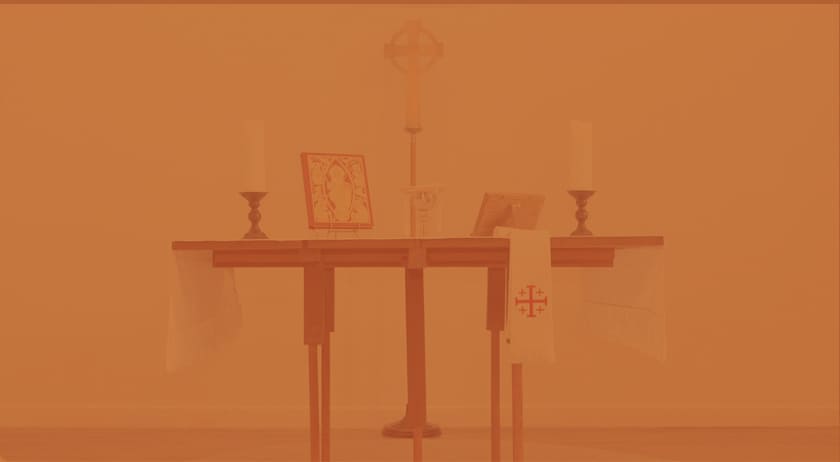
The cross and altar against the wall in a gathering also speaks to this reality where we all set our faces towards God. No worship band or other distractions, we have come to set our gaze on the Lord Himself.