
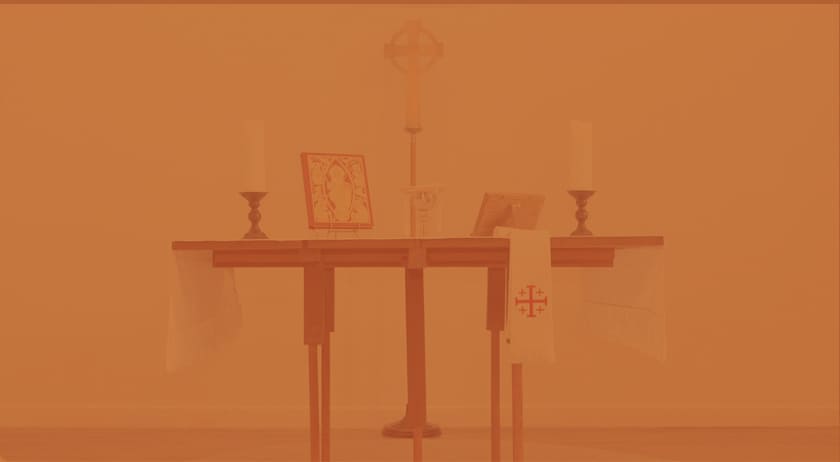
Question 155: Why do you worship God?
Question 155: Why do you worship God?
Answer:
I worship God because He is my Creator, Redeemer, and Sustainer—infinitely worthy of all honor, love, and obedience. He made me for Himself, saved me through Jesus Christ, and dwells with me by His Holy Spirit. Worship is both my duty and my joy, the fitting response to His glory, goodness, and grace. (Psalm 95:6–7, Revelation 4:11, Romans 11:36, Deuteronomy 6:4–5)
Full Scripture References
“Come, let us bow down in worship, let us kneel before the LORD our Maker. For He is our God, and we are the people of His pasture, the sheep under His care.” — Psalm 95:6–7 (BSB)
“You are worthy, our Lord and God, to receive glory and honor and power, for You created all things, and by Your will they existed and were created.” — Revelation 4:11 (BSB)
“For from Him and through Him and to Him are all things. To Him be the glory forever! Amen.” — Romans 11:36 (BSB)
“Hear, O Israel: The LORD our God, the LORD is One. And you shall love the LORD your God with all your heart and with all your soul and with all your strength.” — Deuteronomy 6:4–5 (BSB)
Expanded Explanation of Catechism Question
We worship God because of who He is and what He has done. He alone is holy, eternal, all-powerful, and full of mercy and truth. Worship is not something we do for our benefit—it is the proper, joyful, and reverent response to the God who made us, saved us, and sustains us. As Psalm 29 says, we are to “ascribe to the LORD the glory due His name.”
God does not need our worship—but we need to worship Him. In giving Him glory, we are rightly ordered in our hearts. Canon Dr. Joel Scandrett (Trinity School for Ministry) writes, “Worship is not transactional—it is relational. We adore God not to get something, but because He is worthy.”
Archbishop Foley Beach (ACNA) teaches, “Worship flows from a heart captured by grace. When we see what God has done for us in Christ, we cannot help but bow before Him in awe, love, and praise.”
The 1662 Book of Common Prayer begins Morning and Evening Prayer with the exaltation, “O worship the Lord in the beauty of holiness,” showing that worship is both commanded and beautiful. The liturgy leads us to love God with heart and voice, body and soul.
J.C. Ryle reminds us that worship must spring from the heart: “True worship is not mere formality. It is the inward offering of ourselves to God—daily, gladly, humbly—because He first loved us.” (Practical Religion, 1878)
Bishop Julian Dobbs (Diocese of the Living Word, ACNA) explains, “Worship grounds us in the truth: God is God, and we are not. In worship, we re-center our lives around His majesty and mercy.”
Ultimately, worship is the goal of salvation. We are redeemed to glorify and enjoy God forever. What begins now in word and sacrament will continue in heaven with unending joy and praise.
Early Church Fathers on Catechism Question
St. Ignatius of Antioch (c. 110 AD): “Glorify Christ always, for He is worthy—He who died and rose again for us. Let your worship be constant and pure.” — Letter to the Ephesians, 9
St. Irenaeus of Lyons (c. 130–200 AD): “The glory of God is man fully alive; and the life of man is the vision of God. Worship is the soul beholding and rejoicing in its Maker.” — Against Heresies, 4.20.7
St. Athanasius (c. 296–373 AD): “We were made to worship God and enjoy Him forever. It is our highest calling and our deepest joy.” — On the Incarnation, 10
St. Augustine of Hippo (354–430 AD): “Thou hast made us for Thyself, and our heart is restless until it rests in Thee. Worship is the soul’s return to its source.” — Confessions, Book 1.1