
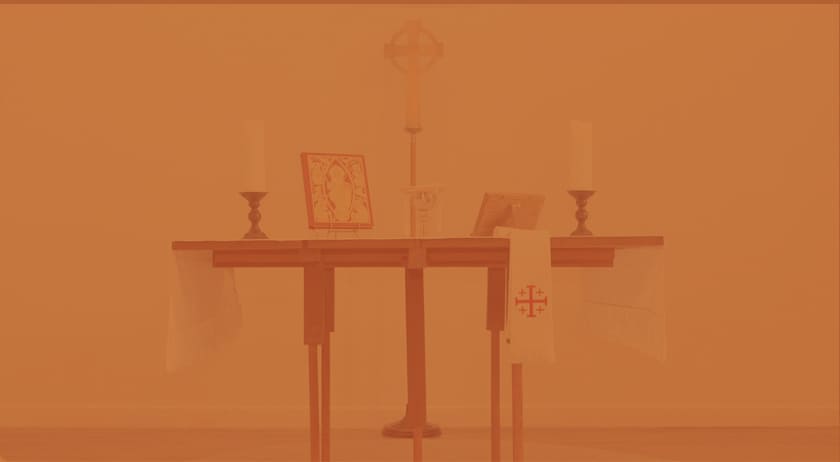
Question 158: What is the Book of Common Prayer?
Question 158: What is the Book of Common Prayer?
Answer:
The Book of Common Prayer is the liturgical book of the Anglican Church. It contains services, prayers, Scripture readings, and catechisms that guide the Church in worship, devotion, and doctrine. Rooted in Scripture and the historic Christian tradition, it unites the Church in common prayer, teaches the faith, and forms disciples through reverent, orderly worship. (1 Corinthians 14:26, Colossians 3:16, Acts 2:42, Matthew 6:9–13)
Full Scripture References
“What then shall we say, brothers? When you come together, everyone has a hymn, a word of instruction, a revelation, a tongue, or an interpretation. All of these must be done to build up the church.” — 1 Corinthians 14:26 (BSB)
“Let the word of Christ dwell in you richly, teaching and admonishing one another with all wisdom, and singing psalms, hymns, and spiritual songs, with gratitude in your hearts to God.” — Colossians 3:16 (BSB)
“They devoted themselves to the apostles’ teaching and to fellowship, to the breaking of bread and to prayer.” — Acts 2:42 (BSB)
“This, then, is how you should pray: ‘Our Father in heaven, hallowed be Your name…’” — Matthew 6:9 (BSB)
Expanded Explanation of Catechism Question
The Book of Common Prayer is the central liturgical and devotional book of the Anglican tradition. First compiled in 1549 under Archbishop Thomas Cranmer, it was designed to gather the Church around a shared form of worship, saturated with Scripture, theological clarity, and spiritual depth. It provides forms for Morning and Evening Prayer, Holy Communion, Baptism, Confirmation, Matrimony, Burial, and more—rooted in the Gospel and tested by centuries of faithful use.
The Prayer Book shapes Anglican worship and discipleship by teaching the faith through prayer. Its language, drawn largely from Scripture, trains Christians to think and speak in biblical patterns. Its order teaches reverence, repentance, and joy. The 1662 edition remains the doctrinal and liturgical standard for global Anglicanism, and modern versions like the 2019 Book of Common Prayer (ACNA) build on its foundation with renewed clarity and pastoral care.
Canon Dr. Joel Scandrett (Trinity School for Ministry) says, “The Book of Common Prayer is not just a manual for worship—it’s a tool for formation. It teaches us how to pray, how to believe, and how to live as disciples of Jesus.”
Bishop Julian Dobbs (Diocese of the Living Word, ACNA) affirms, “The Prayer Book anchors the Church in truth and order. In a time of confusion, it holds us to the wisdom of Scripture and the faith once delivered to the saints.”
J.C. Ryle praised its biblical clarity: “No book in existence contains so much Scripture and sound doctrine as the Book of Common Prayer. It is a treasury of truth—provided it be used with the Spirit’s help and not with superstition.” (Knots Untied, 1874)
Archbishop Foley Beach (ACNA) has said, “The Book of Common Prayer preserves the best of Christian worship across centuries. When we use it in faith, it draws us into the story of salvation and roots us in Christ.”
The Prayer Book is a gift not only for Sunday worship but for daily devotion. It teaches the faithful how to pray morning and evening, how to confess sin and receive grace, how to prepare for Holy Communion, and how to live in step with the Spirit. It is the “common” prayer of a Church united across generations and nations.
Early Church Fathers on Catechism Question
St. Basil the Great (c. 330–379 AD): “We must not pray as each one pleases. The prayers of the Church should be those handed down, for unity, for truth, and for love.” — On the Holy Spirit, 27
St. Cyprian of Carthage (c. 200–258 AD): “Let our prayers be made together with one voice… the Lord taught us to pray not alone, but with the Church, saying, ‘Our Father.’” — On the Lord’s Prayer, 8
St. John Chrysostom (c. 347–407 AD): “When the whole Church prays the same words, the heavens are shaken. There is power in unified, biblical, humble prayer.” — Homilies on Acts, 3
St. Augustine of Hippo (354–430 AD): “Let the people of God have one voice, for they are one body. The liturgy binds their hearts together in love and in truth.” — Sermon 252