
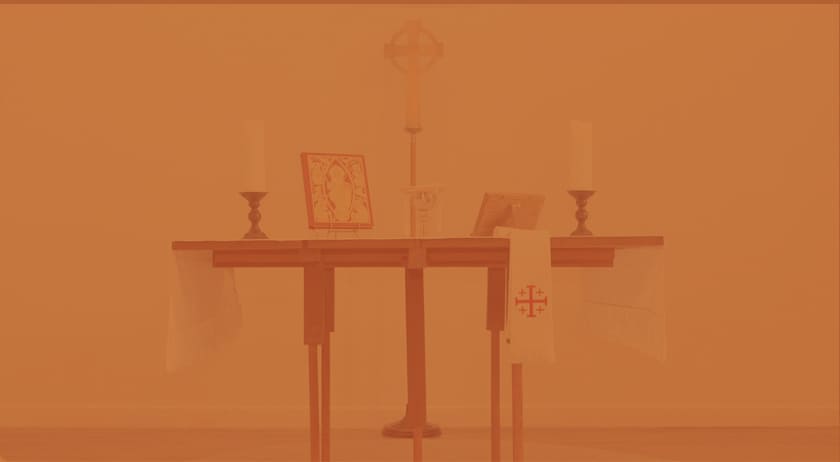
Question 180: What is the ministry of priests?
Question 180: What is the ministry of priests?
Answer:
The ministry of priests is to preach the Word of God, administer the Sacraments, lead the people in worship, pronounce God’s blessing and forgiveness, and shepherd the flock entrusted to their care. Under the authority of the bishop, priests serve as pastors, teachers, and spiritual fathers—nurturing the Church in truth, prayer, and holiness. (1 Corinthians 4:1, 2 Timothy 4:2, John 20:21–23, Acts 20:28)
Full Scripture References
“This is how one should regard us: as servants of Christ and stewards of the mysteries of God.” — 1 Corinthians 4:1 (BSB)
“Preach the word; be prepared in season and out of season; correct, rebuke, and encourage with great patience and careful instruction.” — 2 Timothy 4:2 (BSB)
“Jesus said to them again, ‘Peace be with you! As the Father has sent Me, so also I am sending you.’ And when He had said this, He breathed on them and said, ‘Receive the Holy Spirit. If you forgive anyone his sins, they are forgiven…’” — John 20:21–23 (BSB)
“Keep watch over yourselves and the entire flock of which the Holy Spirit has made you overseers. Be shepherds of the Church of God, which He purchased with His own blood.” — Acts 20:28 (BSB)
Expanded Explanation of Catechism Question
The ministry of priests—also called presbyters—is a calling to serve Christ’s Church through Word, Sacrament, and pastoral care. Priests are set apart under the authority of their bishop to shepherd the people of God, build up the Body of Christ, and equip the saints for ministry in daily life.
At the heart of the priest’s calling is the ministry of the Word and Sacrament. The priest preaches and teaches the Gospel, administers Baptism and Holy Communion, leads the Church in public worship and prayer, pronounces absolution and blessing, and offers pastoral care to the sick, the poor, and the suffering. In all this, he serves not in his own name, but as a representative of Christ and a servant of His people.
Canon Dr. Joel Scandrett (Trinity School for Ministry) writes, “The priest stands at the altar and in the pulpit to point the people to Jesus. He is not the center—Christ is. His job is to proclaim, to pray, and to shepherd.”
Bishop Keith Ackerman (Diocese of Quincy, ACNA) explains, “The priest is a bridge—not between God and man (for Christ alone is that), but between the Church and the world. He helps the Church worship rightly and the world hear the truth clearly.”
The 1662 Book of Common Prayer Ordinal charges priests to “be messengers, watchmen, and stewards of the Lord; to teach and to admonish, to feed the Lord’s family, and to seek for Christ’s sheep that are dispersed abroad.”
J.C. Ryle wrote, “The faithful minister is one who feeds the flock, warns of danger, calls to repentance, and lifts high the cross. He is not a priest in the sense of sacrifice, but a shepherd, teacher, and herald of the Gospel.” (Old Paths, 1877)
Archbishop Foley Beach (ACNA) has said, “A priest is not called to build his own platform, but to serve the people of God in humility. His power is not in personality, but in the Gospel he proclaims and the Sacraments he administers.”
The ministry of priests glorifies Christ by faithfully preaching His Word, offering His Sacraments, and guiding His people in truth and love, so that the Church may grow in grace and reach the world with the Gospel.
Early Church Fathers on Catechism Question
St. Ignatius of Antioch (c. 110 AD): “Respect the presbyters as the council of God, for they guide you in the truth. Let them be to you as the apostles.” — Letter to the Trallians, 3
St. Cyprian of Carthage (c. 200–258 AD): “The presbyters are united with the bishop in caring for the flock. Together they labor in the Word, in discipline, and in prayer.” — Letter 59
St. John Chrysostom (c. 347–407 AD): “The priest stands between God and the people—not as a mediator, but as one who ministers. He touches heaven through prayer, and earth through compassion.” — On the Priesthood, 3.4
St. Augustine of Hippo (354–430 AD): “Let the priest preach Christ, not himself; serve the flock, not his own ambition; love the truth, not popularity.” — Sermon 340